7 Signs Your Neck Curve Is Collapsing. Most People Over 55 Have At Least Three.
A stiff neck in the morning, a headache at the back of your head and a hump forming at the base of your neck aren’t three problems. They’re one. Count how many of these you have.

Your neck is supposed to curve gently forward, in a shallow C. That curve is what keeps the weight of your head, about eleven pounds, balanced on top of your shoulders instead of hanging in front of them.
After fifty, in most of us, that curve has started to flatten. Years of reading, cooking, sewing and phones pull the head forward, and the neck slowly goes straight. Doctors call a straight neck “military neck.” I call mine a collapsed neck curve, because that’s what it looked like on my X-ray.
Most people never get an X-ray. But your neck tells you if its curve is going. Here are the seven signs. Keep count.
You wake up with your neck locked
Not sore from sleeping funny once. Locked, most mornings, so the first thing you do is roll your shoulders and tilt your head side to side before you can get going.
When the curve collapses, the muscles at the back of your neck hold your head up all day and never get to let go. A flat pillow at night keeps them on duty. By morning they’ve set like that.
Your headaches start at the base of your skull

If your headache starts at the back of your head and creeps forward over the top, it may not be a “head” headache at all. Doctors call it a cervicogenic headache: it comes from the neck. The knotted muscles at the base of the skull squeeze the nerves that run up the back of your head.
You turn your whole body to check your blind spot
Reversing out of the driveway. Looking round when someone calls your name. If your neck stops halfway and the rest of you has to follow, the muscles holding your forward head have shortened and locked the joints.
A soft hump is forming at the base of your neck

People call it a dowager’s hump or a neck hump. It builds where the straightened neck meets the upper back, as the body tries to brace the weight of a head that has drifted forward. Ask someone to take a photo of you from the side, standing naturally. Most people are shocked.
Your head doesn’t touch the wall
Stand with your heels, backside and shoulders against a wall. Without tipping your chin up, try to touch the back of your head to it. If you can’t, your head is sitting in front of your shoulders.
of extra load on your neck muscles for every inch your head sits forward. Three inches forward and your neck is holding up a 40-pound head.
You wake at 3 a.m. with a numb or tingling arm
The nerves that run to your arms leave the spine in your neck. When the curve is gone and the muscles around them are tight, lying in one position for a few hours can be enough to set off pins and needles down an arm.
Your neck crunches when you turn it
A grind or a crackle when you turn your head is common, but it gets louder as the neck stiffens and the joints stop gliding through their normal range.
Your count
0–1 signs: your neck curve is probably holding up well. Keep an eye on how you sleep.
2–3 signs: your curve is starting to flatten. This is the best time to do something about it.
4 or more: your neck is carrying a forward head all day and never gets a break. It won’t ease off by itself.
I had five. Here’s what finally helped.
I’ll be honest: I scored five. The locked mornings, the headaches at the back of my head, the blind-spot twist, the arm, and when my daughter took a picture of me from the side, the hump. I had tried two chiropractors, three “orthopedic” pillows and enough ibuprofen to worry my doctor.
What my physical therapist told me changed how I thought about it. A pillow that just props your head up holds the neck the shape it already is. Adjustments wear off in a day or two because the muscles pull it straight again. What works is cervical traction: lying back while the neck is gently lifted and stretched into its curve, with heat to make the muscles let go. And it has to be done most days, which nobody can do at a clinic.
So I found a way to do it at home. It’s a pillow called the Cervana, and it does all three things the clinic does at once:

- Traction. The raised center roll lifts and lengthens your neck back toward its natural curve.
- Heat. Warm pads in the roll sit right on the knotted muscles at the base of your skull.
- Vibration. Four gentle patterns work into the knots while the heat loosens them.
You lie on it for fifteen minutes on the bed or sofa and it switches itself off. I do mine during the evening news. Within a week I was waking up without that locked feeling. By the third week my afternoon headaches had mostly stopped, and I could back out of the garage without twisting in my seat.

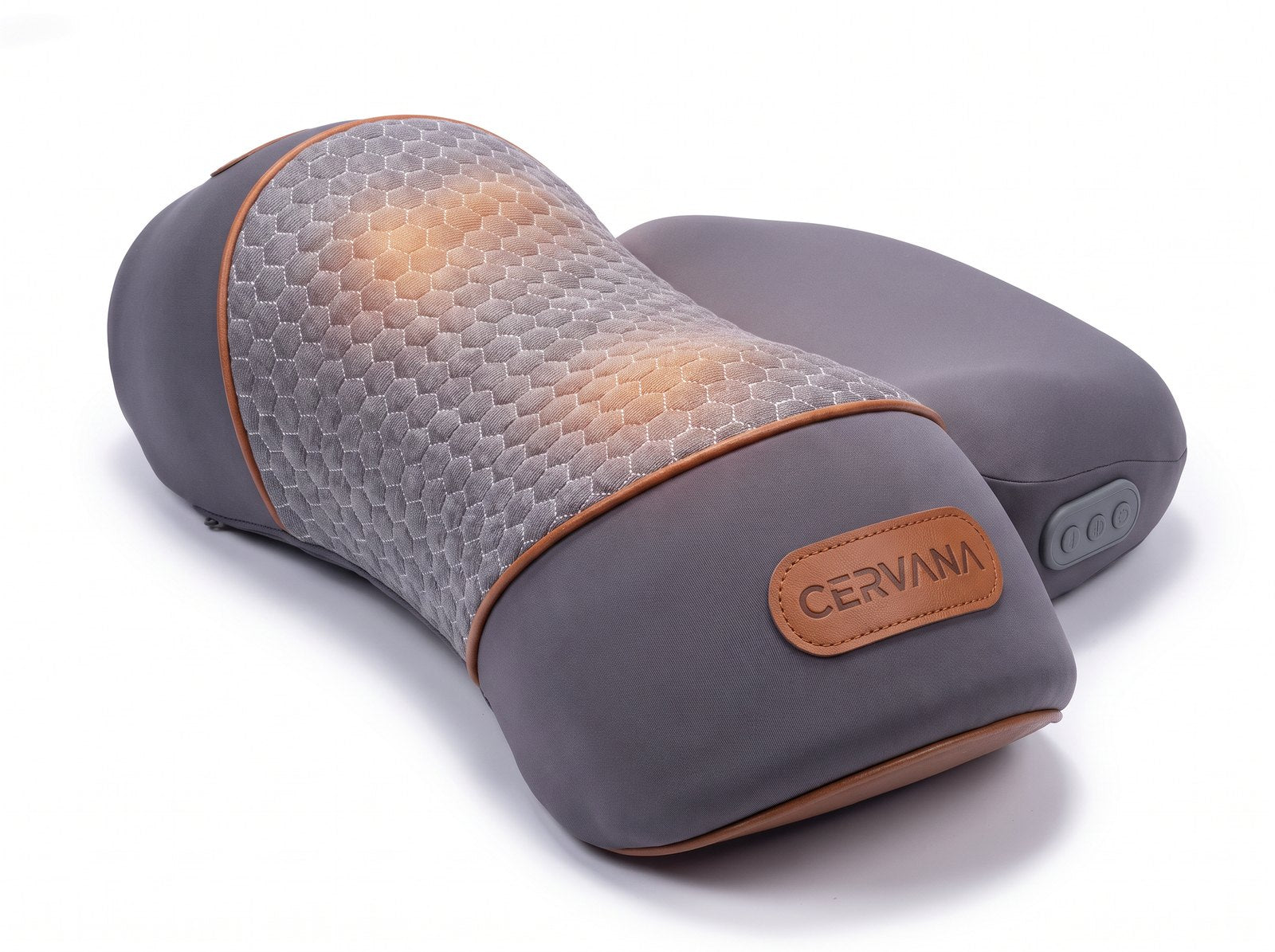
- Takes the load off a forward head — supports the neck back toward its curve
- Morning stiffness and skull-base headaches — heat and vibration on the exact muscles
- Fifteen minutes a night — cordless, rechargeable, auto shut-off
- No appointments, no harness, no door — you just lie back
$367.00 $184.00 today
Money-back guarantee · Free US shipping

Six out of seven. My daughter took the side photo and I nearly fell over. I’m two weeks into the pillow and I’m not waking up locked anymore.

Number 3 is me in the truck every day. Bought one for me and one for my wife. The heat is the best part.

Never knew my headaches could come from my neck. Thank you for writing this.
Cervana is only sold direct from their own site. Their sale price is still showing today, but they tell us stock is limited after this list was shared.
See If It’s Still In Stock →This article reflects the writer’s own experience and is for general information. Individual experiences vary.
Hansraj K.K. (2014). Assessment of stresses in the cervical spine caused by posture and position of the head. Surgical Technology International 25.